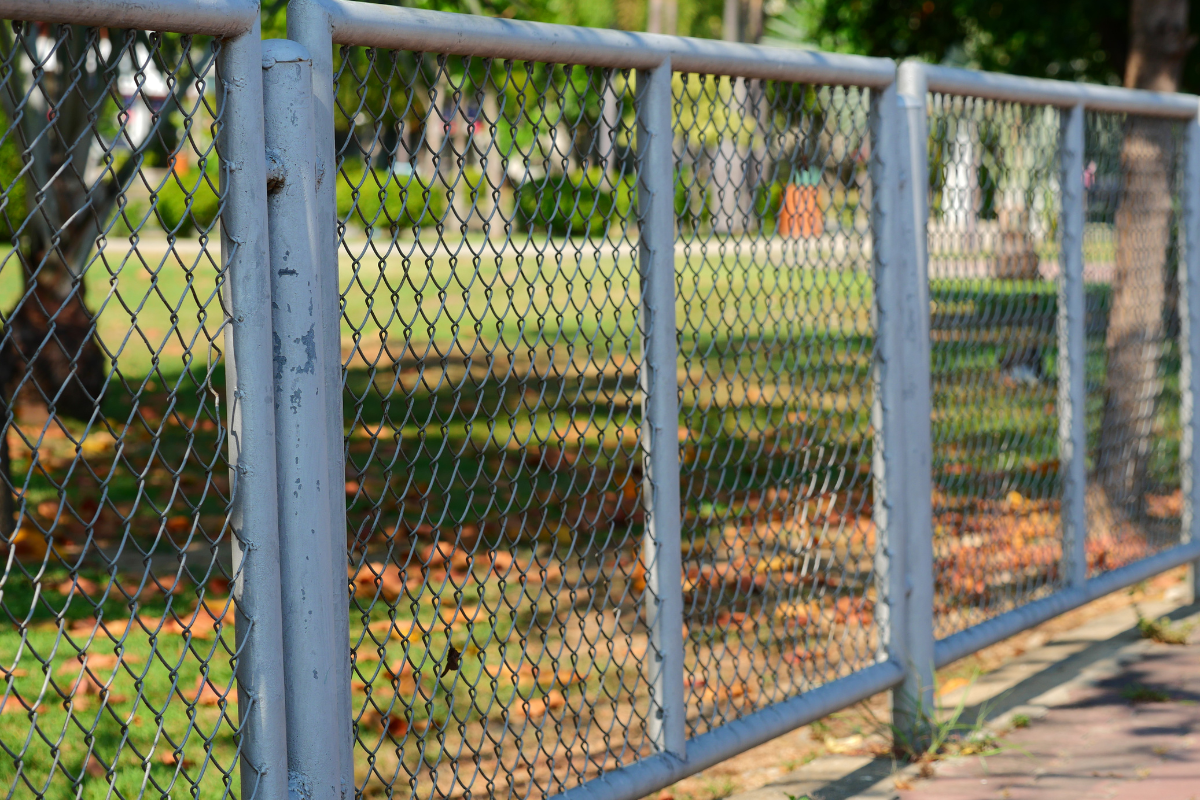
Chain link fencing works hard for a living. It keeps inventory secure, directs foot traffic, protects equipment yards, and defines boundaries without choking visibility. When industrial and commercial properties look for reliable perimeter control, they often land on chain link because it balances cost, durability, and speed of deployment better than almost any other system. The difference between a fence that lasts 25 years with minimal headaches and one that sags, rusts, or invites breaches in year five often comes down to the chain link fence contractor you hire.
I have spent years walking job sites, troubleshooting soil and subgrade surprises, and standing in the rain watching a tension bar get muscled into place before concrete kicked. What follows is the hard-earned perspective of someone who has specified, installed, and maintained miles of chain link for distribution centers, substations, data facilities, rail corridors, and factory campuses.
Where chain link excels for commercial and industrial sites
Most facility managers start with three priorities: security, lifecycle cost, and schedule. Chain link fencing meets these head-on. It delivers a clear boundary that is tamper-resistant, fast to install across long runs, and adaptable to topography and site constraints. Visibility remains high, which matters for safety and surveillance integration. It is also modular. If a truck takes out three panels near a loading dock, a crew can perform chain link fence repair within hours and match the existing fabric, color, and hardware.
Material choices have improved. Galvanized-after-weave (GAW) mesh resists corrosion better than pre-galvanized options. Vinyl-coated fabrics in black or green pair with powder-coated frameworks for coastal and chemical environments. Add-ons like bottom rails, tension wire, and wind screens adapt the system to the site’s behavior. In short, chain link can be security-focused, budget-focused, or somewhere in between.
Selecting a chain link fence contractor who understands industrial realities
The term chain link fence company covers a wide spectrum. One crew might shine at residential enclosures around ball fields. Another will know how to stage materials across a 40-acre logistics site with minimal production interruptions. Industrial and commercial environments demand contractors who can do more than stretch fabric.
Look for documented experience tying into access control, handling embedded conduit for gate operators, and coordinating with fire lanes, utilities, and crane paths. A good chain link fence contractor thinks like a builder and a facility operator. They will ask about trailer approach angles, snow storage zones, forklift travel paths, and future building expansion. On a rail-adjacent project I managed, the contractor pushed for a buffer gate section near a curve so we could relieve tension on a 600-foot run without dismantling the whole fence. That adjustment paid for itself during the first repair.
Insurance coverage, safety program rigor, and competent supervision matter as much as price. You want foremen who understand subgrade compaction, anchor selection, OSHA clearances, and hot-work permits if welding gates onsite. Ask how they handle change conditions: Do they document post-hole refusals on bedrock and propose anchored base plates, or do they fight the rock and leave you with broken posts and voids filled with hope? Those differences show up years later.
Understanding chain link specifications that actually work
The phrase chain link fencing covers a surprisingly broad range of performance. Two fences can look similar and still perform very differently. If you are writing or reviewing specifications, focus on the few details that govern strength, longevity, and ease of chain link fence repair.
Framework: The posts and rails are the skeleton. For typical 6 to 8-foot industrial fences, schedule 40 pipe has been the workhorse. Heavier pipe or structural tubing comes into play at 10 feet and above, in high-wind zones, or near loading docks where impacts happen. Line posts set at 8 to 10 feet on center handle most runs. Corner and terminal posts must be upsized. Don’t cheap out here. Underbuilt terminals are the number one reason fabrics sag and gates drift.
Footings: Concrete size and depth should reflect frost depth, uplift from wind screens, and soil type. In cohesive clays, bell-shaped footings reduce uplift. In sandy soils, depth matters more than diameter to resist pullout. In rock, mechanical anchors or epoxy dowels can replace augered footings if documented properly. Local frost depth charts and ASCE 7 wind data should drive high-level decisions, then a field test or two keeps assumptions honest.
Fabric: Most industrial projects use 2-inch diamond mesh. Heavier security applications call for 1-inch. Wire gauge ranges from 9-gauge for day-to-day industrial duty to 6-gauge for critical assets. For corrosive environments or coastal locations, vinyl-coated fabric over galvanized core gives a double barrier against rust. Ask whether the mesh is galvanized after weaving. GAW performs better at the twist points where corrosion starts.
Tension hardware: Tension bars that run the full height of the fabric distribute loads into the terminal posts. Tension bands, count and gauge, should match the fabric weight. Bottom tension wire helps discourage crawl-under attempts. For high-traffic areas, a continuous bottom rail beats tension wire and holds up better during snow plowing and sweeping.
Security enhancements: Three-strand barbed wire on 45-degree outrigger arms is still standard on many industrial perimeters. Where appearance matters, swap to vertical extensions with barbed wire or concertina set behind the fence line. Privacy slats can reduce visibility but add wind load. Wind screens and branding mesh do the same. Plan for higher post sizes and deeper footings if those are part of the design.
Gates: Gate issues consume more maintenance budget than most people expect. Cantilever gates avoid ground tracks, which helps in snow and debris-prone sites. For big openings, paired cantilevers or overhead slide gates may be justified. Pay attention to the posted clear opening versus the hardware footprint. That difference can be a foot or more, and trucks notice. Hinged gates over 12 feet per leaf invite sag unless properly engineered with diagonal bracing and adequate hinge hardware.
A word on codes, utilities, and site logistics
Chain link fence installation touches more than dirt and steel. Permitting often involves zoning setbacks, height limits near roadways, and sight triangle requirements at driveways. On industrial sites, utility maps are rarely perfect. Always locate, mark, and pothole where main runs and terminal posts cross suspected utilities. I have seen a 10-minute pothole save a $30,000 shutdown when a post hole nearly landed on a 13.2 kV line. Post-hole refusals near duct banks and culverts are common. A capable chain link fence contractor will carry alternative foundation details in the submittal package so the crew keeps moving.
Staging matters. A half-mile perimeter takes thousands of pounds of framework and fabric. On an active campus, staging must not block egress or fire lanes. Seasonal timing matters too. Setting posts in winter is fine if you protect concrete from freezing and adjust mix designs. In monsoon climates, you will lose days if trench drains near gate operators aren’t installed before the first big rain.
How installation quality shows up years later
On day one, most fences look decent. By year five, the shortcuts reveal themselves. The first place I look is the fabric tension. If the diamonds distort near terminals, the tension bars or bands may be undersized, or the post embedment is shallow. On slopes, look at the steps. Smooth “racks” follow grade with crisp ties and equal diamond spacing. Sloppy steps create gaps at the bottom and stress at the top. Rust blooms at fabric twist points suggest poor galvanization or cuts that weren’t sealed. Gate rollers that wobble and chain guards missing from operators point to rushed commissioning.
Proper chain link fence installation also shows in how well the fence resists repeated minor impacts. Forklift tips, snow throw, pallet snagging, and ladder bumps add up. Fences with bottom rails, closer post spacing near corners, and properly braced gate frames https://judahmvpb699.wpsuo.com/affordable-upgrades-for-chain-link-fence-repair-and-reinforcement take these in stride.
Integrating chain link fencing with access control and surveillance
Modern facilities rarely treat fencing as a stand-alone scope. Cameras, card readers, vehicle detection loops, and intercoms tie into gates and pedestrian entrances. If the chain link fence company is not comfortable coordinating conduits, junction boxes, and equipment pads, you end up with exposed cables and retrofits that void warranties.
Plan for power and data early. Underground conduits under the gate opening must be sleeved and located to avoid the concrete track or gate sweep. Pedestrian gates often require magnetic locks or request-to-exit buttons, which need protected wire paths through the hinge side. Conduits embedded in posts are cleaner than surface-mounted raceways, but they require shop drawings and field alignment. Integrators prefer rigid frameworks and predictable mounting plates for camera poles. A good chain link fence contractor will fabricate those mounts in the shop, not in the mud.
Maintenance patterns and smarter repairs
Every fence needs upkeep. The most efficient approach pairs periodic inspection with targeted repairs. Walk the line twice a year. Focus on low points where water collects, corners and gates where forces concentrate, and any area with heavy public contact. A typical chain link fence repair kit on a service truck includes extra fabric, tie wires, bands, a few tension bars, and hardware for the specific gauge and finish on your site.
When a panel is cut, resist the urge to stitch a narrow patch into the mesh. That repair often creates stress concentrations. Cutting out a larger rectangle and weaving in new fabric with proper selvage is stronger and less visible. For posts that loosen due to freeze-thaw cycles, injection of non-shrink grout around the post can buy time, but if the footing is undersized or the soil is pumping water, a proper rework is better. If high winds are ripping wind screens, the issue is usually not the screen but the framework. Either reduce screen coverage or upgrade the framework and anchors.
Coastal sites deserve extra diligence. Salt accelerates corrosion at tie wires and tension hardware. Stainless or coated ties help. Rinse schedules near splash zones make a difference. In chemical plants, review the material compatibility charts. Certain polymers in vinyl coatings handle exposure to solvents better than others, and the difference shows up as chalking and brittle fractures after a handful of summers.
Cost drivers you can control
Chain link starts as a budget-friendly option, but choices made at design and procurement can swing total cost of ownership by a wide margin. The main drivers are height, gauge, finish, gate type, and site conditions. Increasing fence height from 8 to 10 feet can add 20 to 35 percent to the installed price, partly due to taller posts, deeper footings, and lift equipment. Moving from 9-gauge to 6-gauge fabric increases material cost noticeably, but for high-risk areas where cutting is a concern, the added resistance often justifies the spend.
Vinyl coating carries a premium over bare galvanized, yet it can pay off in corrosive environments by delaying replacement for years. Gates cost more per linear foot than straight runs because they are custom assemblies with rollers, guides, motors, and control wiring. On a large site, the number and width of gates can rival the cost of hundreds of feet of fence. The cheapest place to save money is layout. Straight lines with logical gates, minimal tight corners, and clear access for equipment reduce both installation time and maintenance trips.
When chain link is not the right answer
Fencing is never one-size-fits-all. High-end corporate campuses sometimes prioritize aesthetics and choose ornamental steel with integrated access control. Federal sites with anti-climb requirements may require welded wire mesh panels, anti-ram crash barriers, and fiber optic intrusion detection embedded in the fence line. In high-noise areas where sound reduction is a goal, solid barrier systems outperform chain link with screens. Awareness of these alternatives is part of the responsibility of any chain link fence contractor working on complex projects. A contractor who only says yes to chain link is not looking out for your broader needs.
Common pitfalls and how to avoid them
I have seen the same five mistakes repeat on industrial and commercial sites, often under schedule pressure. Each is simple in concept and costly in practice.
- Ignoring grade transitions: Long runs that hit a swale or berm without a plan end up with gaps that invite intrusion and animals. Survey the grade and plan step points or rake tolerances in advance. Underestimating wind loads: Privacy slats and branded windscreens seem harmless until a storm bows the line. If you add sails, upgrade posts and foundations accordingly. Gate layouts that fight traffic: A 30-foot opening sounds generous until a tractor trailer crabs into the yard at an angle. Mock the turning radii on paper. Choose cantilever gates where debris or snow will foul a ground track. Mixing finishes: Combining galvanized framework with vinyl-coated fabric because it saves a few dollars creates a patchwork appearance and uneven corrosion behavior. Keep finishes consistent. Skipping submittals and mockups: A one-bay mockup with the selected fabric, post size, tension hardware, and a short bottom rail reveals conflicts before the crew commits to a thousand feet of fence.
What to expect during a well-run installation
A professional chain link fence company starts with layout and control. They string lines, mark post centers, and confirm offsets from property lines and utilities. They drill or excavate post holes, set terminals first, and pour footings to the right elevation with bell shapes or sleeves if required. Line posts follow, then rails, then fabric. Crews should stretch fabric with proper come-alongs and clamps, not improvised tie-downs. Tension is set evenly, ties are placed at the correct spacing, and sharp wire ends are oriented away from travel paths.
Gates get set and aligned after the main run has cured. Operators are mounted last, calibrated, and tested with safety devices: photo eyes, edge sensors, and loop detectors. If you see the crew training your staff at the end of the day and handing over maintenance manuals, you are working with the right people.
Coordinating around operations and safety
On live industrial sites, the fence crew is another moving part in an already complex system. Good contractors schedule around peak truck hours and coordinate with site security for temporary openings. They maintain safe walkways where the fence line crosses pedestrian routes. They keep hardware and cut wire out of traffic lanes and clean up daily. The site feels orderly. Supervisors carry pre-task plans that identify pinch points, overhead lines, and weather risks. You can tell when a team takes safety seriously by their anchors and harnesses during gate work and by how they barricade open post holes when weather forces a pause.
Sustainability and reuse
Chain link fencing lends itself to reuse. Framework and gates can be repositioned if a yard expands, as long as cuts and welds are done cleanly. Galvanized steel is recyclable. When a project scope includes removing an existing fence, ask the contractor to salvage gates and usable framework. The buyback on recycled steel will not fund your next project, but it reduces waste and disposal costs. Powder-coated frameworks, if scratched, can be touched up with compatible coatings that extend their life against rust.
When to call for service versus in-house fixes
In-house maintenance teams can handle minor tasks: retying loose fabric, reattaching a slat, lubricating gate rollers, or replacing a broken tie. If a gate posts starts to lean, fabric tension drops across a long run, or an operator behaves inconsistently, call the chain link fence contractor. Misaligned operators can create dangerous pinch scenarios, and leaning terminals often signal a concrete failure below. On high-security sites, any cut or tamper should trigger professional assessment to ensure no bypass devices remain.
The role of documentation
Treat your fence like an asset. Keep a simple record: installation date, contractor, fabric gauge and finish, post sizes, footing depths, gate models, and operator serial numbers. Note changes. If you upgrade a section with privacy slats, write it down. Documentation speeds repairs, keeps parts consistent, and avoids guesswork when a new manager takes over.
What a strong warranty looks like
Warranties vary. Materials commonly carry a manufacturer warranty of 10 to 15 years against red rust on galvanized or vinyl-coated fabric. Workmanship warranties from a reputable chain link fence contractor typically run one to two years. Be wary of longer workmanship promises that lack language around exclusions, because those can be hard to enforce. A meaningful warranty includes response time commitments for critical failures on active perimeters, especially gates and operators.
Choosing between bids without getting burned
Lowest price wins is a tempting policy, but with fence work it can backfire. During bidding, require submittals that state fabric gauge, mesh size, galvanization type, post schedule, footing details, and gate specifications. Make bidders acknowledge wind loads if wind screens or slats are part of the plan. Ask for at least two references for projects similar in scale and use. Look past vague phrases like “commercial grade” and insist on numbers. Apples-to-apples comparisons remove the room for corner cutting.
A simple pre-award checklist
- Verify the contractor’s experience with projects of similar scale and operational complexity. Confirm materials: fabric gauge, mesh size, coating, post schedule, and footing depth based on local frost and wind. Review gate type and operator integration, including safety devices and conduit routes. Align on staging, traffic control, and working hours around facility operations. Require a one-bay mockup or detailed shop drawings with hardware counts and locations.
Final perspective from the field
The fence that disappears into the background is usually the best kind for an industrial or commercial property. It does its job quietly by holding tension through seasons, swinging and sliding smoothly, and blending with the site’s visual language. You get there with a clear specification, a thoughtful layout, and a chain link fence company that controls the small details day after day. Good steel, good galvanization, and good craftsmanship are not luxuries in this category. They are the reason a facility manager sleeps a little better when the forecast turns ugly.
Whether you are expanding a distribution yard, securing a generator compound, or reopening a plant that needs fast perimeter control, invest time in choosing the right partner. A seasoned chain link fence contractor will guide you through the trade-offs, anticipate the pitfalls, and deliver chain link fencing that earns its keep year after year.
Southern Prestige
Address: 120 Mardi Gras Rd, Carencro, LA 70520
Phone: (337) 322-4261
Website: https://www.southernprestigefence.com/